
Teaching English in Japan – Nagoya

Published: 08 April, 2015  |  Last updated: 08 April, 2015

Teaching English in Nagoya, Japan
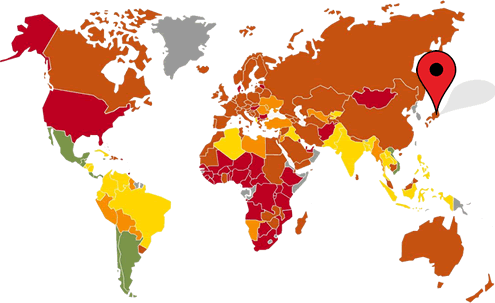
 

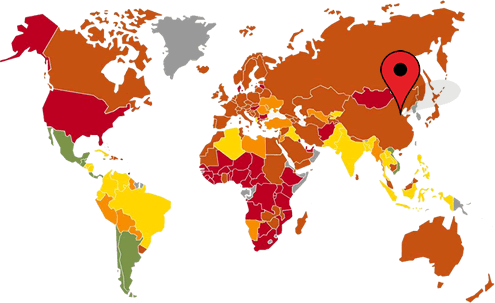
 Nagoya, Japan

Report submitted on 08 April, 2015 by Linda.

Teaching English in Nagoya, Japan:

How can teachers find teaching jobs in Nagoya, Japan?
Websites, notice boards, agencies, word-of-mouth.

The main English teaching jobs available are:
Full time English language school positions, part time English language school positions, agencies (send teachers to different locations), teaching at kindergartens / pre-schools, teaching at state schools, teaching at private international schools, teaching at colleges / universities, teaching at companies, private teaching (not through a school, agency, etc.).

What are the minimum teaching requirements?
University degree.

What teaching requirements would you recommend?
University degree.

What are the levels of payment?
250,000 yen (US$2,080) per month for full time work. 3,000 yen (US$25) per hour for part-time or private work. 3,500-4,000 yen (US$29-33) per hour for Business English classes.

How many teaching days a week is normal?
5 days per week.

How many face-to-face teaching hours a week is normal?
30 hours per week.

What is the normal arrangement for holidays?
4 weeks a year usually – 2 at Xmas, 1 for Golden Week in May and 1 for Ubon in August.

What advice would you give to someone considering coming to Nagoya, Japan to teach English?
The hours can be quite long but the work itself is not difficult and there is plenty of private work available so if you want to save and are prepared to work hard then it’s a good place to live. The lifestyle itself is not something I love as it’s too work focused but I came here to save money so for me it has been worth it in that sense.

What are the positive aspects of teaching English in Nagoya, Japan?
Plenty of jobs, all of my Japanese co-workers have been super friendly and helpful.

What are the negative aspects for teaching English in Nagoya, Japan?
Long hours and extra tired students due to all the extra-curricular activities they do.

What are some of the teaching challenges for English teachers teaching the local people in your area?
It’s sometimes hard to get them to talk or express ideas or opinions due to their culture.


Living in Nagoya, Japan:

Are there any visa or other legal requirements to live in Japan?
Yes you need a valid working visa but most companies will organise this.

What is the cost of living like in Japan?
It’s high enough but you can still save – rent is about 50,000-60,000 yen (US$415-500) per month including utilities. A meal out costs about 1,500 to 2,000 yen (US$12-17).

What are the usual accommodation arrangements and how can you find accommodation?
It’s difficult for foreigners to find accommodation so your school usually organises it or there are some apartment complexes which cater to foreigners.

Other than teaching, what positive aspects are there for living in Nagoya, Japan?
Easy, comfortable living. Clean and safe country.

Other than teaching, what negative aspects are there for living in Nagoya, Japan?
Culture can be difficult to cope with and the rules and conservatism can be hard to deal with.

What advice would you give to someone considering coming to Nagoya, Japan?
Forget all your ideas or expectations of Japan – just be prepared to accept what it is.

What things do you miss most (other than family and friends) from your home country?
Decent bread and good music.

What do you think you will miss most when (or if) you leave Japan?
Good money, people I work with.

What things would you recommend to new teachers in your area to bring with them from their home country?
You can get most things here – there isn’t anything I couldn’t live without. Maybe stock up on skincare as a lot of the products have whitening in them here.


About Me and My Work:

My Name: Linda

Nationality: Irish

Students I’ve taught in Japan: Babies (0-2 years), toddlers (2-4 years), pre-school / kindergarten (4-6 years), elementary (6-12 years), junior high school (12-15 years), high school (15-18 years), university, adults, business

Where I teach: World Family in Nagoya. Teaching here for 1.5 years.

How I found my current jobs: Through Gaijinpot.

My school facilities: Excellent – Resources, classroom, assistance from company and colleagues.

Teacher support at my school: training / workshops, lesson observations, teacher evaluations, peer support / training
 

Do you teach English in Japan?

Tell us about your experiences – click here to submit your report about teaching English in Japan.
No Comment Leave a Comment

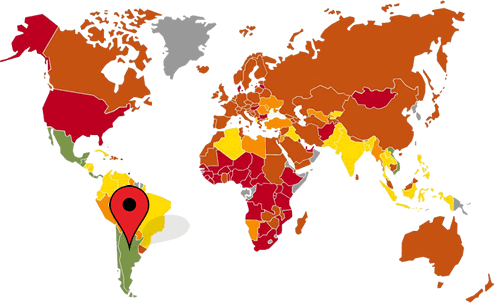
Teaching English in Argentina – Cordoba

Published: 08 April, 2015  |  Last updated: 10 September, 2018

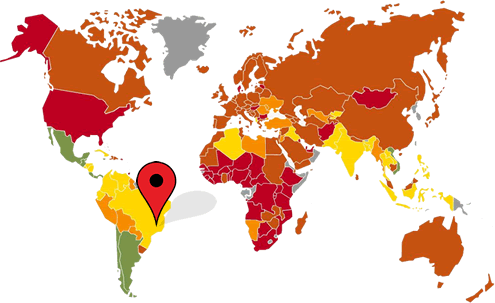
Teaching English in Cordoba, Argentina

Cordoba, Argentina


Report submitted on 08 April, 2015 by Rachelle.

Teaching English in Cordoba, Argentina:

How can teachers find teaching jobs in Cordoba, Argentina?
By looking online. Going to language institutes.

The main English teaching jobs available are:
Part time English language school positions, agencies (send teachers to different locations), private teaching (not through a school, agency, etc.).

What are the minimum teaching requirements?
Advanced to native English level. a TEFL certificate is recommended.

What teaching requirements would you recommend?
I recommend being flexible with the schedule. It’s not easy to find a M-G 9-5pm position.

What are the levels of payment?
About $80 pesos (US$9) per hour if you work for an institute. if you work privately, the hour is about $150 pesos (US$17).

How many teaching days a week is normal?
4-5 days per week.

How many face-to-face teaching hours a week is normal?
8-12 hours per week.

What is the normal arrangement for holidays?
No classes offered during vacation time.

What advice would you give to someone considering coming to Cordoba, Argentina to teach English?
I enjoy teaching here. it’s not my reason for moving to Argentina, but there are plenty of people wanting to learn here.

What are the positive aspects of teaching English in Cordoba, Argentina?
I work for myself, and have geared my business towards children, I love teaching the children. My students go to a bilingual school, so i am simply reinforcing what they learn.

What are the negative aspects for teaching English in Cordoba, Argentina?
By teaching private lessons, students can cancel or stop taking classes at any time. I suggest charging per month.

What are some of the teaching challenges for English teachers teaching the local people in your area?
Inflation causes students to cut back on costs, i.e., extra classes.


Living in Cordoba, Argentina:

Are there any visa or other legal requirements to live in Argentina?
No, but a workers visa helps.

What is the cost of living like in Argentina?
About US$1,000 per month with rent/food/etc.

What are the usual accommodation arrangements and how can you find accommodation?
You can do a shared living, rent an apartment or house.

Other than teaching, what positive aspects are there for living in Cordoba, Argentina?
College is free.

Other than teaching, what negative aspects are there for living in Cordoba, Argentina?
Inflation.

What advice would you give to someone considering coming to Cordoba, Argentina?
Do your research!.

What things do you miss most (other than family and friends) from your home country?
I miss the food from California.

What do you think you will miss most when (or if) you leave Argentina?
I will miss teaching English and of course, weekend bbqs (asados).

What things would you recommend to new teachers in your area to bring with them from their home country?
Everything is extremely expensive here in relation to the USD. I recommend coming with your cell phone and computer, and bring some maple syrup!.


About Me and My Work:

My Name: Rachelle

Nationality: USA

Students I’ve taught in Argentina: Babies (0-2 years), toddlers (2-4 years), pre-school / kindergarten (4-6 years), elementary (6-12 years), junior high school (12-15 years), high school (15-18 years), university, adults, business

Where I teach: I teach privately for all ages all levels and I teach in company for corporations here in Cordoba.  Teaching here for 4 years.

My school facilities: Excellent – I use laptops, smartphones, videos, etc.


Do you teach English in Argentina?

Tell us about your experiences – click here to submit your report about teaching English in Argentina.

3 Comments Leave a Comment

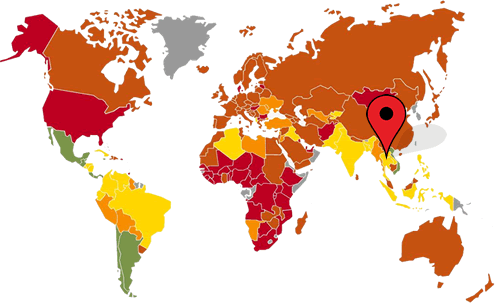
Teaching English in Thailand – Loei

Published: 06 April, 2015  |  Last updated: 06 April, 2015

Teaching English in Loei, Thailand

Loei, Thailand


Report submitted on 06 April, 2015 by Jay.

Teaching English in Loei, Thailand:

How can teachers find teaching jobs in Loei, Thailand?
Visit government, private schools and language schools, in person.

The main English teaching jobs available are:
Full time English language school positions, part time English language school positions, teaching at kindergartens / pre-schools, teaching at state schools, teaching at colleges / universities, teaching at community centers, etc., private teaching (not through a school, agency, etc.).

What are the minimum teaching requirements?
University degree in any subject, TEFL, TOEIC for non-native speakers.  Native speakers are prefered.

What are the levels of payment?
Starting at approx. 350 baht (US$11) per hour private teaching.
Starting at 25,000 – 30,000 baht (US$790 – US$940) per month salary schools.

How many teaching days a week is normal?
5 days per week.

How many face-to-face teaching hours a week is normal?
25 hours per week.

What is the normal arrangement for holidays?
4 weeks holidays in April/May.  2 weeks for festivals and religious holidays.  Normal paid holidays.

What advice would you give to someone considering coming to Loei, Thailand to teach English?
Meet other farang (foreigners) at ‘The Saloon’ on Friday night. Many teachers meet there for drinks after 19:00 hours

What are the positive aspects of teaching English in Loei, Thailand?
Plenty of work, grateful and eager students and cooperative parents, stressless life.

What are the negative aspects for teaching English in Loei, Thailand?
Level of spoken English in society is extremely low.

What are some of the teaching challenges for English teachers teaching the local people in your area?
You do have to learn to speak basic Thai, also to read and write it as well.


Living in Loei, Thailand:

Are there any visa or other legal requirements to live in Thailand?
You need a business visa or non “o” (based on marriage).

What is the cost of living like in Thailand?
Approx 30,000 baht (US$940) for single, 50,000 baht (US$1,570) for a couple.

What are the usual accommodation arrangements and how can you find accommodation?
There are no arrangements.  Drive around and ask around. Many houses for rent between 4000 and 8000 baht (US$125-250).

Other than teaching, what positive aspects are there for living in Loei, Thailand?
Laid back, friendly people, sunny climate, good food.

Other than teaching, what negative aspects are there for living in Loei, Thailand?
Hardly any cultural life up in the North East of Thailand.  Visa and work-permit hassle – burocracy.

What advice would you give to someone considering coming to Loei, Thailand?
Do your homework, and do not try anything illegal. Only work with the right visa and permit.

What things do you miss most (other than family and friends) from your home country?
Nothing.

What do you think you will miss most when (or if) you leave Thailand?
Easy living, good food, warm weather, the people.

What things would you recommend to new teachers in your area to bring with them from their home country?
Good VPN router.


About Me and My Work:

My Name: Jay

Nationality: Dutch

Students I’ve taught in Thailand: Elementary (6-12 years), high school (15-18 years), adults, business

Where I teach: I teach privately, to children and adult, to small businesses. Working here for 1 year.

How I found my current jobs: Word of mouth, and advertisements/brochure.


Do you teach English in Thailand?

Tell us about your experiences – click here to submit your report about teaching English in Thailand.

2 Comments Leave a Comment

Teaching English in China – Dong Ying

Published: 15 March, 2015  |  Last updated: 15 March, 2015

Teaching English in Dong Ying, China

 Dong Ying, China

Report submitted on 15 March, 2015 by Janine.

Teaching English in Dong Ying, China:

How can teachers find teaching jobs in Dong Ying, China?
There are many jobs online and also recruitment agencies as well.

The main English teaching jobs available are:
full time English language school positions, part time English language school positions, teaching at kindergartens / pre-schools, teaching at state schools, teaching at private international schools, teaching at colleges / universities, private teaching (not through a school, agency, etc.), training centres.

What are the minimum teaching requirements?
Native English speaker, Bachelor’s Degree.

What teaching requirements would you recommend?
Do a TESOL course

What are the levels of payment?
Varies from position to position average 6500 RMB (aprrox. US$1,040) per month.

How many teaching days a week is normal?
5 days per week.

How many face-to-face teaching hours a week is normal?
20 hours per week.

What is the normal arrangement for holidays?
If working in schools then same as school – National holidays and festivals, end of semester break.
If working in training centres – National holidays and festivals.

What advice would you give to someone considering coming to Dong Ying, China to teach English?
Make sure you read the contract well before signing.

What are the positive aspects of teaching English in Dong Ying, China?
The kids really want to learn. Education is valued here.

What are the negative aspects for teaching English in Dong Ying, China?
Language barrier.

What are some of the teaching challenges for English teachers teaching the local people in your area?
Language barrier.


Living in Dong Ying, China:

Are there any visa or other legal requirements to live in China?
You need a letter of invitation from your employer to apply for an entry visa. The employer will then help you to apply for a resident permit to allow you to live and work in the country.

What is the cost of living like in China?
Quite cheap. Usually accommodation is included in the contract. Eating out is inexpensive and abundant.

What are the usual accommodation arrangements and how can you find accommodation?
Most employers will include accommodation in the package.

Other than teaching, what positive aspects are there for living in Dong Ying, China?
Variety of food. Opportunities to travel, close to many other countries.

Other than teaching, what negative aspects are there for living in Dong Ying, China?
Communication can be an issue. The government has a lot of control.

What advice would you give to someone considering coming to Dong Ying, China?
Make sure you understand everything your position entails.

What things do you miss most (other than family and friends) from your home country?
Some of the food. Driving.

What do you think you will miss most when (or if) you leave China?
Friends made, the kids.

What things would you recommend to new teachers in your area to bring with them from their home country?
Potato masher, blue tack.


About Me and My Work:

My Name: Janine

Nationality: New Zealander

Students I’ve taught in China: Toddlers (2-4 years), pre-school / kindergarten (4-6 years), elementary (6-12 years)

Where I teach: Golden Bridge Training Center in Dong Ying. Working here for 1.5 years.

How I found my current jobs: Through a TESOL course I attended in New Zealand.

My school facilities: Adequate – Technology – computer/projector.


Do you teach English in China?

Tell us about your experiences – click here to submit your report about teaching English in China.

No Comment Leave a Comment

Teaching English in China – Hefei

Published: 15 March, 2015  |  Last updated: 15 March, 2015

Teaching English in Hefei, China

 Hefei, China


Report submitted on 15 March, 2015 by Sally.

Teaching English in Hefei, China:

How can teachers find teaching jobs in Hefei, China?
There are many online agencies. I found mine through Atlantic Education International AEI-inc.ca.

The main English teaching jobs available are:
Teaching at private international schools.  I teach at a Canadian International School. This one is Win Hefei which is located in Anhui province There are several schools owned by the same company scattered around China.

What are the minimum teaching requirements?
You need a Bachelor of Education at least. An M.Ed is also an asset. It would be beneficial to have some sort of TESL training but it is not mandatory.

What teaching requirements would you recommend?
Experience teaching abroad would be considered an asset, but again, it is not mandatory.

What are the levels of payment?
The pay is quite good and comparable to what other International schools pay.

How many teaching days a week is normal?
5 days per week.

How many face-to-face teaching hours a week is normal?
20-30 hours per week.

What is the normal arrangement for holidays?
If you work for the International School, you will get 2 weeks at Christmas and 2 weeks for Chinese New Year as well as the Chinese holidays such as National Day (1 week) and a few Chinese long weekends.

What advice would you give to someone considering coming to Hefei, China to teach English?
Do some basic research about the Chinese culture. Make sure it would be a good fit for you. It is certainly not for everyone. Training in TESL would certainly be of assistance.

What are the positive aspects of teaching English in Hefei, China?
The opportunity to travel within the region was and is a big draw for me. This year I have visited Nanjing, Shanghai, Hong Kong and Macau as well as Thailand. I will visit Beijing in May to explore the Great Wall. Teaching young children is certainly a reward in itself. Meeting the local people and making new friends here is wonderful as well.

What are the negative aspects for teaching English in Hefei, China?
The culture shock can be disturbing at times. Maniacal drivers with a ‘me first’ attitude who seem bent on taking you out on crosswalks. Once you understand that they will not stop for you, it is easier to navigate the streets. Sometimes I just want to go about my business without being constantly stared at. Old and young men spitting on the street is jarring as well. We have a saying at our school ‘TIC’- this is China!

What are some of the teaching challenges for English teachers teaching the local people in your area?
Obviously the language barrier is the biggest challenge. I have 16 students at the moment and only one understands what I am saying. The children seem to be overly indulged, read-spoiled, so discipline can be an issue when they don’t seem to have heard the word ‘no’ before. I teach at a new International school on the edge of Hefei. The area is just being built up so we are quite far from shopping/entertainment.


Living in Hefei, China:

Are there any visa or other legal requirements to live in China?
You must apply for and hold a Residence Permit for Foreigners.

What is the cost of living like in China?
Our apartments are provided free of charge. The only thing we must buy is food and entertainment.

What are the usual accommodation arrangements and how can you find accommodation?
Our apartment is provided for us.

Other than teaching, what positive aspects are there for living in Hefei, China?
Opportunities for travel, meeting new people.

Other than teaching, what negative aspects are there for living in Hefei, China?
See above.

What advice would you give to someone considering coming to Hefei, China?
Don’t compare Italians and the systems here to the one’s in your home country. There are many great aspects to this country, as there are many bad ones. Don’t focus on the negative aspects.

What things do you miss most (other than family and friends) from your home country?
I miss driving to shop for necessities. We take taxis and buses to everything.  My daughter, friends and pets. Major holidays such as Christmas.

What things would you recommend to new teachers in your area to bring with them from their home country?
Shoes in their size. Larger sizes can be difficult to find. Deodorant and personal items. Sufficient clothing. Larger sizes difficult or impossible to find often.


About Me and My Work:

My Name: Sally

Nationality: Canadian

Students I’ve taught in China: Pre-school / kindergarten (4-6 years).

Where I teach: Canadian International School of Hefei. Working here for 1 year.

How I found my current jobs: Online through AEI-inc.ca.

My school facilities: Excellent – It is a new school with excellent facilities. New library, smart boards in every classroom, swimming pool, cafeteria.

Teacher support at my school: Training / workshops, lesson observations, teacher evaluations.


Do you teach English in China?

Tell us about your experiences – click here to submit your report about teaching English in China.

2 Comments Leave a Comment

Teaching English in Italy – Turin (Report 2)

Published: 15 March, 2015  |  Last updated: 15 March, 2015

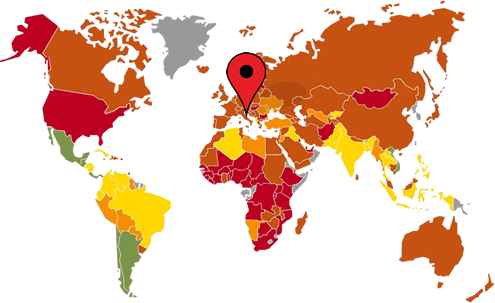
Teaching English in Turin, Italy


Turin, Italy

Report submitted on 08 March, 2015 by Stefi.

Teaching English in Turin, Italy:

How can teachers find teaching jobs in Turin, Italy?
Finding English schools on the internet.

The main English teaching jobs available are:
full time English language school positions, part time English language school positions, teaching at kindergartens / pre-schools, teaching at private international schools, teaching at companies, private teaching (not through a school, agency, etc.)

What are the minimum teaching requirements?
Mother tongue English speaker.

What teaching requirements would you recommend?
Any experience teaching (not necessarily English). Experience with children.

What are the levels of payment?
– private or for companies: 20-40 euro/hour
– private kindergarten/elementary school: 7-10 euro/hour
– English schools: 10-15 euro/hour

How many teaching days a week is normal?
5 days per week.

How many face-to-face teaching hours a week is normal?
30 hours per week.

What is the normal arrangement for holidays?
If you’re under a full time contract, you get paid. If you do private lessons or work part time no paid holidays.

What advice would you give to someone considering coming to Turin, Italy to teach English?
Do private lessons!

What are the positive aspects of teaching English in Turin, Italy?
Lots of work.

What are the negative aspects for teaching English in Turin, Italy?
If you work for a school you don’t get paid very much.

What are some of the teaching challenges for English teachers teaching the local people in your area?
The people are not exposed to English in their daily lives so learning is slow.


Living in Turin, Italy:

Are there any visa or other legal requirements to live in Italy?
Permesso di soggiorno (Premission to stay).

What is the cost of living like in Italy?
– rent: 250-400 euro/month
– food (eating at home): 20 euro/week
– eating out, entertainment: 20 euro/night

What are the usual accommodation arrangements and how can you find accommodation?
Renting a room in a house or renting an apartment.
bakeca.it
subito.it
easystanza.it

Other than teaching, what positive aspects are there for living in Turin, Italy?
Not too big, not too small. Lots to do. Very economic.

Other than teaching, what negative aspects are there for living in Turin, Italy?
The attitude of the average person is: frustrated, a bit negative, and wound up.

What advice would you give to someone considering coming to Turin, Italy?
Don’t compare Italians and the systems here to the one’s in your home country. There are many great aspects to this country, as there are many bad ones. Don’t focus on the negative aspects.

What things do you miss most (other than family and friends) from your home country?
Efficiency.

What do you think you will miss most when (or if) you leave Turin, Italy?
The culture.

What things would you recommend to new teachers in your area to bring with them from their home country?
English books!


About Me and My Work:

My Name: Stefi

Nationality: Canadian

Students I’ve taught in Italy: Toddlers (2-4 years), pre-school / kindergarten (4-6 years), elementary (6-12 years), junior high school (12-15 years), adults.

Where I teach: Privately. I used to work at a kindergarten and got all my contacts for private lessons through the school. Working here for 3 years.

How I found my current jobs: I started doing solely private lessons because I accumulated contacts during my time at the kindergarten.

My school facilities: Good – Private schools can vary. Some are very well-organized while others are not at all.

Teacher support at my school: Peer support / training.


Do you teach English in Italy?

Tell us about your experiences – click here to submit your report about teaching English in Italy.

No Comment Leave a Comment

Teaching English in Saudi Arabia – Riyadh

Published: 15 March, 2015  |  Last updated: 15 March, 2015

Teaching English in Riyadh, Saudi Arabia


Riyadh, Saudi Arabia 

Report submitted on 04 March, 2015 by Jf.

Teaching English in Riyadh, Saudi Arabia:

How can teachers find teaching jobs in Riyadh, Saudi Arabia?
Looking online through an agency is probably the easiest way. Unless you come here, but its very hard to get a visiting visa. Its a difficult country to live in if you are single, and whatever contract you are given should be gone over with a fine tooth comb, and checked by someone who has lived here and has knowledge of the system.

The main English teaching jobs available are:
Full time English language school positions, teaching at kindergartens / pre-schools, teaching at private international schools, teaching at colleges / universities

What are the minimum teaching requirements?
Bachelors in almost anything, and at least a TEFL.

What teaching requirements would you recommend?
There really is no need for experience when teaching here. Usually unqualified teachers are hired because they are cheaper than native English speakers.

What are the levels of payment?
The pay is very good if you are hired as a teacher or ESL teacher. Its 12,000SR plus per month (approx. US$3,200).

How many teaching days a week is normal?
5 days per week.

How many face-to-face teaching hours a week is normal?
30 hours per week.

What is the normal arrangement for holidays?
Paid holidays. Half summers paid for if you sign a two year contract.

What advice would you give to someone considering coming to Riyadh, Saudi Arabia to teach English?
Don’t come. Especially if you are single female. Its a mans world here and its hard to get around…women can’t drive here. it can be very boring here. The life here is different because there are many restrictions. Look carefully into what the country has to offer before making a decision to come here.

What are the positive aspects of teaching English in Riyadh, Saudi Arabia?
The people are friendly for the most part.

What are the negative aspects for teaching English in Riyadh, Saudi Arabia?
There aren’t any real positive aspects of teaching here. You have to fight for your wages, there are many deductions that schools will do, the women are difficult to work with and have little work ethics. Most people are unqualified for their positions

What are some of the teaching challenges for English teachers teaching the local people in your area?
There are not really any more challenges here than anywhere else.


Living in Riyadh, Saudi Arabia:

Are there any visa or other legal requirements to live in Saudi Arabia?
It’s very difficult to get in here on a visitors visa, work visas can be obtained from the company that hires you.

What is the cost of living like in Saudi Arabia?
Cost of living here is very cheap. Rent is cheap, and housing allowance is always given as part of your contract package. Food costs are very minimum, and electric is cheap. Internet is expensive relatively speaking in comparison to other costs here.

What are the usual accommodation arrangements and how can you find accommodation?
Accommodation can be found through estate agents, or the school will help you, or sometimes they have places for you to stay.

Other than teaching, what positive aspects are there for living in Riyadh, Saudi Arabia?
If you are Muslim, then there are a lot of positive aspects of living here as a Muslim.
Also the culture is rich and there’s a lot a person can learn and gain experience from.

Other than teaching, what negative aspects are there for living in Riyadh, Saudi Arabia?
Its set up for men mainly. Women don’t really have a place in society here. There is quite a bit of oppression here. We can’t drive, which can make getting around difficult because taxi drivers are unreliable and unsafe.

What advice would you give to someone considering coming to Riyadh, Saudi Arabia?
Think very carefully before coming.

What things do you miss most (other than family and friends) from your home country?
I miss the greenery. I miss trees, and rain.

What do you think you will miss most when (or if) you leave Riyadh, Saudi Arabia?
I will miss hearing the call to prayer. The different kinds of food, and the diversity of the people. People are very hospitable here.

What things would you recommend to new teachers in your area to bring with them from their home country?
Anything soaps or shampoos without chemicals, sugar free drinks, and that’s about it. Most everything you can get here.


About Me and My Work:

My Name: Jf

Nationality: American

Students I’ve taught in Saudi Arabia: Pre-school / kindergarten (4-6 years), elementary (6-12 years), junior high school (12-15 years), adults.

Where I teach: I teach in a school and privately. Working here for 3 years.

How I found my current jobs: I live here so I looked at different schools.

My school facilities: Adequate – Schools are very different here than what we may be used to in the US or the UK. They are below adequate here. You are not supplied with anything, and everything you need must be at your expense..

Teacher support at my school: None.


Do you teach English in Saudi Arabia?

Tell us about your experiences – click here to submit your report about teaching English in Saudi Arabia.

No Comment Leave a Comment

Teaching English in Brazil – Contagem

Published: 15 March, 2015  |  Last updated: 03 November, 2016

Teaching English in Contagem, Brazil

Contagem, Brazil 

Report submitted on 27 February, 2015 by Karen.

Teaching English in Contagem, Brazil:

How can teachers find teaching jobs in Contagem, Brazil?
Most private schools require you to take the Cambridge test. But if you are going to teach English at the public schools you must have a bachelor´s in English.

The main English teaching jobs available are:
Part time English language school positions.

What are the minimum teaching requirements?
I’m not sure. I do know my nephew passed Cambridge´s FCE and was given a part time job, but when they needed to lay off some teachers he was one of the first to go.

What teaching requirements would you recommend?
I would think that a certificate in Advanced English would be sufficient.

What are the levels of payment?
Private conversation classes US$30-US$75 an hour. I don’t know what other pay is because I am my own boss (I charge about US$15).  I charge less than half the most expensive schools charge and a little lower than say Kumon.

How many teaching days a week is normal?
Two days per week.

How many face-to-face teaching hours a week is normal?
Two hours per week.

What is the normal arrangement for holidays?
Brazil loves holidays and no one expects to have to work much less study. Exception: Kumon that is Japanese.

What advice would you give to someone considering coming to Contagem, Brazil to teach English?
Seek out Businesses. They pay well and have accommodation for you to teach at. They are always searching for qualified teachers.

What are the positive aspects of teaching English in Contagem, Brazil?
Pretty much everyone loves English. They know the songs and watch American movies. For this reason there are many things to discuss that they may have not understood and want to understand.

What are the negative aspects for teaching English in Contagem, Brazil?
Can’t think of any.

What are some of the teaching challenges for English teachers teaching the local people in your area?
Controversial issues like American military and use of guns. Also the down talk of local politicians. Although I can agree that there is a lot of corruption, I don´t think foreigners should point fingers. It is tricky territory.


Living in Contagem, Brazil:

Are there any visa or other legal requirements to live in Brazil?
Yes. Equivalent of American Green card.

What is the cost of living like in Brazil?
Our family of 5 has been living on less than US$1,000 a month. I do not recommend it. I would say that at least US$2,000 would be sufficient. But that is me. Depends on what you consider necessities. We don’t go out much at all. Our splurging evolves buying extras for pizza night or buying a roasted chicken for Sunday dinner.

What are the usual accommodation arrangements and how can you find accommodation?
Apartments are common in the cities. We own our home but many people rent either house or apartment. A reasonable apartment runs about US$500 a month in my neighbourhood but it can be as much as US$1000 in better neighbourhoods.

Other than teaching, what positive aspects are there for living in Contagem, Brazil?
I love how social people are here. They are friendly and talkative.

Other than teaching, what negative aspects are there for living in Contagem, Brazil?
Crime rate, low funds for education and health. Corruption at all levels.

What advice would you give to someone considering coming to Contagem, Brazil?
Learn to appreciate the differences as just that: being different. Don’t think of things as necessarily right or wrong but try to adapt to the culture. I am not speaking of moral issues but of things like people showing up without calling just to chat or having to have rice and beans for lunch or they just didn’t eat and so on.

What things do you miss most (other than family and friends) from your home country?
Order in traffic, schools, shopping malls, just in about everything.

What do you think you will miss most when (or if) you leave Contagem, Brazil?
Friendship and variety in fruits and vegetables at low cost (as compared to U.S.)

What things would you recommend to new teachers in your area to bring with them from their home country?
I’ve lived here so long that there is little I miss. I do have my family bring canned cherries because I love to make cheese cake and my kids love syrup so I ask for maple flavoring. Sometimes I ask for peanut butter too. I can’t think of anything other than food, but I have adapted well and we can get just about anything online.


About Me and My Work:

My Name: Karen

Nationality: American/Brazilian (double nationality)

Students I’ve taught in Brazil: Pre-school / kindergarten (4-6 years), elementary (6-12 years), junior high school (12-15 years), university.

In the past I have taught mostly adults and privately but this year I opened Hands On English at the request of neighbors. My slogan is “English at the Right Age” because teaching English to kids you get to help them develop an ear for the language. Also teaching kids is my passion. I have taught preschool in the U.S. and at Bible School so since my neighbors were wanting English for their kids it was only natural for me to choose this age group. I love the ESL lesson plans at ESL KidStuff (www.eslkidstuff.com/esl-kids-lesson-plans.html). They are a guide and easy to adapt to each class situation.

Where I teach: Hands On English in Contagem. Working here for 3 years.

How I found my current jobs: Off and on through the years people who know I am American come knocking and request my services. I have been mostly engaged in raising my own children but we have been so tight for money that I decided to give it a try. I remodelled the offices we have downstairs and set up a classroom facility with drinking fountain and bathroom. It is really nice. I have started with just twelve students but I would like to have as many as twenty.

My school facilities: Good – I don’t have chairs that are appropriate for my preschoolers. I ran out of funds. But their table is good and they enjoy class. We have cushions and a rug where we spend over half our time. Compared to public schools I would give my school an excellent. Unfortunately the schools around me lack resourced.  But I just opened just two days ago.  I have been remodeling and buying things since December. I will continue to work until I get to very good!  By my standards…

Teacher support at my school: None.


Do you teach English in Brazil?

Tell us about your experiences – click here to submit your report about teaching English in Brazil.

No Comment Leave a Comment

Teaching English in Italy – Pesaro

Published: 02 February, 2015  |  Last updated: 15 March, 2015

Teaching English in Pesaro, Italy

Pesaro, Italy


Report submitted on 02 February, 2015 by Frances McCusker.

Teaching English in Pesaro, Italy:

How can teachers find teaching jobs in Pesaro, Italy?
They can apply directly to a private language school or present a project to the primary middle and secondary school. Many schools publicise on their websites and there is an official application form for this.

The main English teaching jobs available are:
Full time English language school positions, part time English language school positions, teaching at kindergartens / pre-schools, teaching at state schools, teaching at companies, private teaching (not through a school, agency, etc.)

What are the minimum teaching requirements?
In a language school they usually want a university degree and a TEFL teaching certificate.

What teaching requirements would you recommend?
In the private language school experience is not always essential as many of them have their own method and they usually provide some kind of training before the teacher starts.

What are the levels of payment?
– Private language school 12 euro per hour (approx)
– State school 20-40 euro per hour
– Companies 30-60 euro per hour

How many teaching days a week is normal?
5-6 days per week.

How many face-to-face teaching hours a week is normal?
30 hours per week.

What is the normal arrangement for holidays?
Private language schools usually close in August but provide classes all year round. If a teacher needs a day off they are usually ok with this if another teacher is willing to cover.

What advice would you give to someone considering coming to Pesaro, Italy to teach English?
I would advise them to be careful when signing a contract with private language schools because they often exploit teachers by offering training and then asking them to pay for it if they don’t stay for a minimum time. Be clear about what would be acceptable to you from the beginning and insist on being paid every month for all the hours you work.

What are the positive aspects of teaching English in Pesaro, Italy?
The possibility of teaching a wide variety of ages and backgrounds in different places.

What are the negative aspects for teaching English in Pesaro, Italy?
Unsocial hours and often having last minute changes made to your timetable. Low pay in private language schools.

What are some of the teaching challenges for English teachers teaching the local people in your area?
There aren’t any particular challenges as far as the students are concerned the challenges are dealing with the school management.


Living in Pesaro, Italy:

Are there any visa or other legal requirements to live in Italy?
For European citizens no but for outside the European union I imagine there would be some kind of visa requirement.

What is the cost of living like in Italy?
A typical rent would be about 500 euro per month but usually language schools will help the teacher find a flat share.
Eating out not expensive food and other necessities about comparable with The United Kingdom.

What are the usual accommodation arrangements and how can you find accommodation?
Usually teachers coming from abroad will flat share and language schools will usually help with this.

Other than teaching, what positive aspects are there for living in Pesaro, Italy?
Safe environment. People are generally friendly. Good weather in summer with a beautiful beach and plenty of places to go in the evening.

Other than teaching, what negative aspects are there for living in Pesaro, Italy?
It’s quiet in winter and the weather can be very chilly and damp.

What advice would you give to someone considering coming to Pesaro, Italy?
Small Italian towns can be lonely places if you have no previous contacts.

What things do you miss most (other than family and friends) from your home country?
Some food. Real pubs the British sense of humour

What do you think you will miss most when (or if) you leave Pesaro, Italy?
The climate and the food.

What things would you recommend to new teachers in your area to bring with them from their home country?
Nothing in particular.


About Me and My Work:

My Name: Frances McCusker

Nationality: British

Students I’ve taught in Italy: Pre-school / kindergarten (4-6 years), elementary (6-12 years), junior high school (12-15 years), high school (15-18 years), university, adults, business.

Where I teach: Elementary school Sacro cuore in Pesaro. Working here for 25 years.

How I found my current jobs: I was recommended by a teacher where I was doing a language project.

My school facilities: Good – Classroom, text books and technology.

Teacher support at my school: None.


Do you teach English in Italy?

Tell us about your experiences – click here to submit your report about teaching English in Italy.

No Comment Leave a Comment

Teaching English in Norway – Baerum

Published: 02 February, 2015  |  Last updated: 02 February, 2015

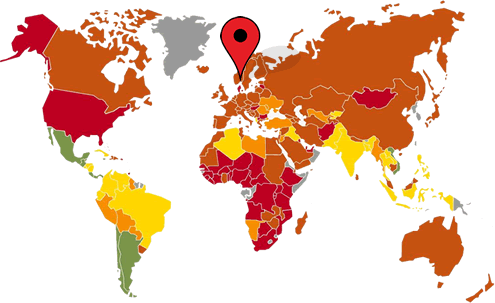
Teaching English in Baerum, Norway


 Baerum, Norway

Report submitted on 02 February, 2015 by Sarah.

Teaching English in Baerum, Norway:

How can teachers find teaching jobs in Baerum, Norway?
It is really not very easy to teach English as a foreigner in Norway since most Norwegians speak the language quite well. There are many very qualified Norwegians teaching English. I have Norwegian citizenship so it is not a problem for me to live and work here, but not so easy for people without specific work agreements or residency permit.

The main English teaching jobs available are:
Teaching at state schools, teaching at private international schools, teaching at colleges / universities

What are the minimum teaching requirements?
Most school require a teaching degree, but I know of a few people who do not but then work part-time only.

What teaching requirements would you recommend?
If you want a good full-time position you need to have a degree in teaching.

What are the levels of payment?
Quite high – around $20/hour

How many teaching days a week is normal?
5 days per week.

How many face-to-face teaching hours a week is normal?
17 hours per week.

What is the normal arrangement for holidays?
Teachers have all the school holidays off – Easter, winter break, fall break, Christmas, then in May there are a lot of state holidays so many days off.

What advice would you give to someone considering coming to Baerum, Norway to teach English?
Hard to teach ESL here since the regulations are tough and most people speak decent English, but I am sure there are ways especially on a university level.

What are the positive aspects of teaching English in Baerum, Norway?
I love it. People love English here and it is fun to teach kids. Lots of holidays and good pay.

What are the negative aspects for teaching English in Baerum, Norway?
Winters are looooong and people are difficult to get to know and it is expensive.

What are some of the teaching challenges for English teachers teaching the local people in your area?
Just getting permission to work here – other than that there are plenty of substitute positions that are a good way to get into a school.


Living in Baerum, Norway:

Are there any visa or other legal requirements to live in Norway?
Yes, I am not sure of the specific details but I do know that unfortunately it is not easy to get permission to work here if you do not have a pre-arranged agreement with a company.

What is the cost of living like in Norway?
Expensive – Norway is one of the most expensive places in the world, but the pay is high.

What are the usual accommodation arrangements and how can you find accommodation?
There are plenty of small apartments in houses that are for rent – website: www.finn.no.

Other than teaching, what positive aspects are there for living in Baerum, Norway?
It is beautiful, every day I am amazed at the beauty of this country! Oslo is a great city, super fun and cool.

Other than teaching, what negative aspects are there for living in Baerum, Norway?
People can be cold and sometimes unfriendly.

What advice would you give to someone considering coming to Baerum, Norway?
Try it maybe you could find a way to make it work!

What things do you miss most (other than family and friends) from your home country?
Friendly conversation between strangers and helpful people.

What do you think you will miss most when (or if) you leave Baerum, Norway?
I don’t plan on leaving – I have kids and a Norwegian husband. But I would miss the beauty and how the society runs – focus on children and old people – all aspects of a person’s life is valued here, not just the phase of life where you make money.

What things would you recommend to new teachers in your area to bring with them from their home country?
money 🙂


About Me and My Work:

My Name: Sarah

Nationality: American

Students I’ve taught in Norway: Elementary (6-12 years), junior high school (12-15 years), high school (15-18 years), adults, business

Where I teach: Lesterud skole in Lommedalen. Working here for 2 years.

How I found my current jobs: A job ad online.

My school facilities: Very good – A well maintained building, relatively clean, good range of English books in library, good teacher work space, not a great amount of computers – just one computer room with about 30 computers for the whole school.

Teacher support at my school: Training / workshops.

Links: sarahhannevik.com


Do you teach English in Norway?

Tell us about your experiences – click here to submit your report about teaching English in Norway.

1 Comment Leave a Comment